

How Big Is Too Big? A Design-Forward Guide to Buying the Right TV (From Someone Deep in the Throes of It)
This blog by Allison Cobb explains how to choose the right TV size, whether TVs above fireplaces should tilt down, proper mounting height, OLED vs QLED differences, 4K vs 8K resolution, no-glare screens, and how to design a room around a TV for Bluffton and Hilton Head Island homes.
By Allison Cobb | The Cobb Group | eXp Luxury Realty
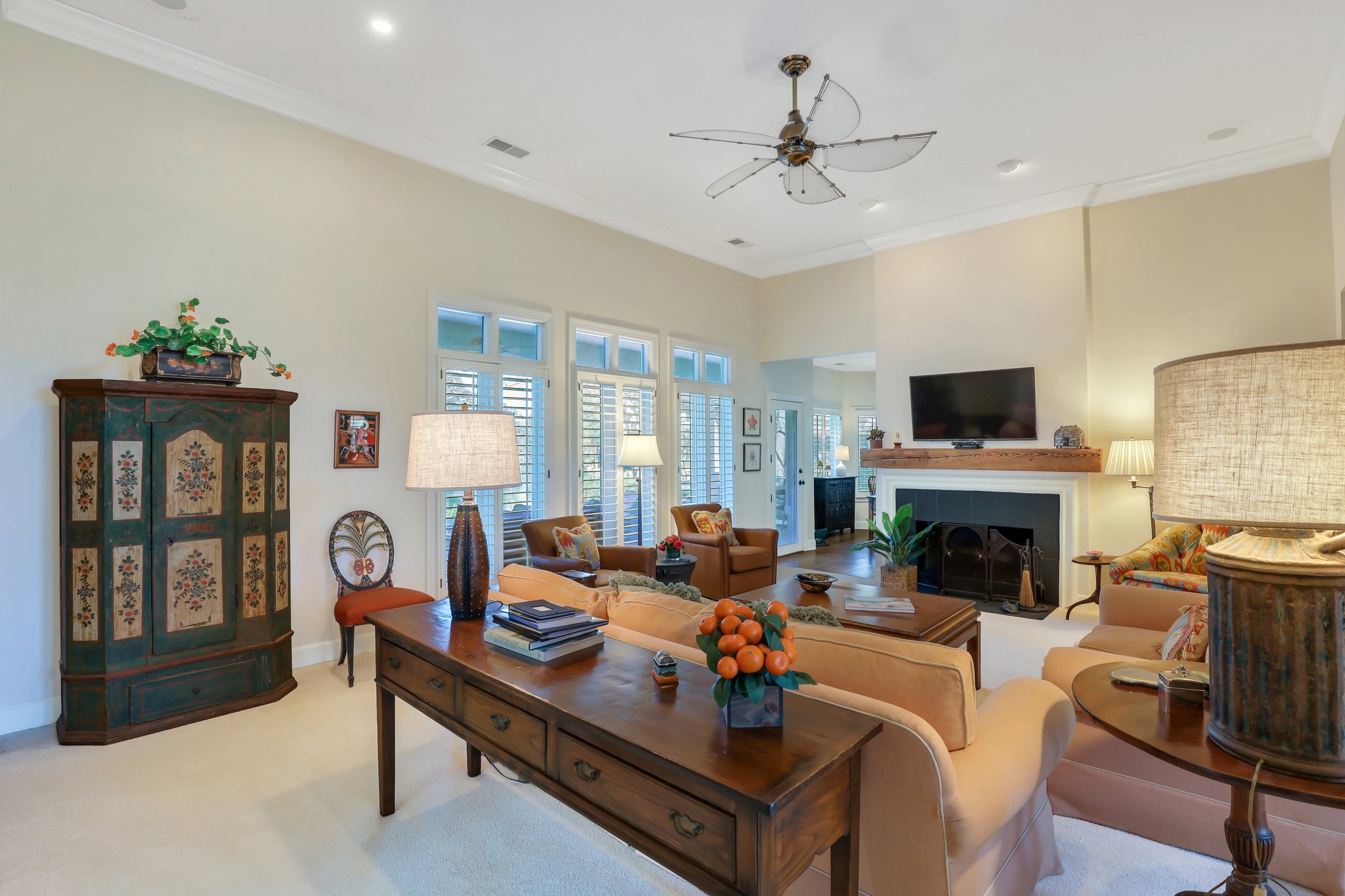
I just went TV shopping this weekend.
If you’ve done this recently, you know it’s not a quick errand—it’s an experience. Specs, screens, glare ratings, subscriptions I didn’t know existed, and suddenly you’re debating whether an 85-inch TV is wildly irresponsible or exactly right.
(For the record: we went with the 85". Ouch. Is it too big? Jury’s still out—but I have thoughts.)
As a Realtor working daily with homeowners and buyers in Bluffton and Hilton Head Island, I see firsthand how design choices—especially TV size and placement—shape how people experience a home.
If you’re buying a TV for your home—or thinking about upgrading—here’s everything I wish someone had calmly explained before I walked into that store.
First: Is Bigger Actually Better?
Short answer: usually, yes.
Almost every homeowner I know who upgrades their TV says the same thing afterward:
“I should have gone bigger.”
Why?
-
Rooms today are larger and more open
-
Viewing distances are farther than people realize
-
TVs are thinner and visually lighter than they used to be
An 85" TV sounds massive… until it’s on the wall. Then it often feels just right—especially in great rooms, family rooms, or open-concept living spaces common in Bluffton and Hilton Head Island homes.
Too small feels apologetic.
Too big rarely does.
How Big Is Too Big? (It’s Not the Inches)
A TV feels “too big” when:
-
It overwhelms the wall
-
It’s mounted too high
-
It has no visual balance around it
It does not feel too big simply because of screen size.
With thoughtful design—clean mounting, proper height, visual grounding—larger TVs actually disappear more than smaller ones.
How High Should a TV Be Hung? (This Matters More Than Size)
This is one of the biggest mistakes I see in homes.
Rule of thumb:
-
The center of the TV should be at or slightly below eye level when seated
-
Fireplaces almost always push TVs too high
-
Neck strain ruins both comfort and design
A TV should feel integrated into the room—not perched above it.
If the TV Has to Go Above the Fireplace… Should It Tilt Down?
This question comes up constantly—and the honest answer is: yes, a slight tilt usually helps.
Above-the-fireplace placement creates two challenges:
-
The TV is higher than ideal
-
The viewing angle forces your eyes and neck upward
A gentle downward tilt:
-
Improves viewing comfort
-
Reduces glare from windows and overhead lighting
-
Makes the screen feel less looming
That said, tilt is a solution, not a perfect fix.
Design note:
-
A subtle tilt works well
-
A dramatic tilt becomes visually distracting
-
If you notice the tilt the moment you walk into the room, it’s probably too much
Modern mounts with micro-adjustments are ideal.
Does Tilting Affect Picture Quality?
With newer TVs, very little—if at all.
OLED and newer QLED screens handle tilt well. In fact, with no-glare or anti-reflective screens (which we chose), tilting can actually improve daytime viewing—especially important in light-filled Lowcountry homes.
Extreme angles can slightly impact contrast, but a modest tilt typically enhances comfort rather than harming the picture.
The Best Alternative (If Your Budget and Layout Allow)
Pull-down or articulating mounts are one of the smartest solutions I see in higher-end homes.
They allow the TV to:
-
Sit higher and flatter when not in use
-
Drop to a better viewing height when watching
-
Preserve the fireplace as a focal point
From a design perspective, this is the best compromise when the fireplace dictates placement.
How Do You Make a TV Work in a Beautiful Room?
This was my personal struggle. I wanted The Frame. My husband… did not.
We compromised.
What works:
-
Clean wall mounting (no visible cords)
-
Visual grounding with cabinetry, millwork, or a console
-
Calm materials—wood, stone, soft texture
A TV doesn’t have to be the star—but it does need intention.
OLED vs. QLED: The Plain-English Version
OLED
-
Incredible contrast and deep blacks
-
Stunning picture quality
-
Typically more expensive
-
Can reflect more light in very bright rooms
QLED
-
Very bright (great for sunny spaces)
-
Excellent color
-
Often more budget-friendly
-
Slightly less contrast
In real life? Both look great. Room lighting matters more than the spec sheet.
4K vs. 8K: Do You Really Need 8K?
For most homes: no.
4K remains the sweet spot for:
-
Content availability
-
Everyday viewing
-
Value
8K looks incredible in stores, but most content isn’t optimized for it yet.
Why No-Glare Was the Deciding Factor for Us
This ended up being the game-changer.
No-glare screens:
-
Reduce reflections
-
Feel softer and less shiny
-
Integrate better into bright rooms
We chose a no-glare TV that still allows access to The Frame art subscription, which gave me the aesthetic win and my husband the performance win.
Design compromise at its finest.
Why TVs Matter in Real Estate (Yes, They Do)
I see this constantly when buyers tour homes.
As Allison Cobb, working with buyers across Bluffton and Hilton Head Island, I can tell you that TV placement and scale quietly influence how buyers perceive a room—often without them realizing why.
Well-placed TVs:
-
Help define space
-
Show scale correctly
-
Reinforce how the home lives
Poor placement:
-
Shrinks rooms
-
Distracts from architecture
-
Creates awkward focal points
Designing around a TV—rather than fighting it—always wins.
So… Is 85" Too Big?
Ask me again in a month.
But honestly? In a properly scaled room, mounted at the right height, with thoughtful design around it—big can be better.
The key isn’t the inches.
It’s the intention.
Seller & Buyer FAQs: Real Estate Q&A
Does TV size impact resale value?
Indirectly. A well-designed living space helps buyers visualize how they’ll live in the home.
Should TVs be removed before selling?
Not always. Sometimes they help define large rooms.
What matters more: size or placement?
Placement. Always.
Final Thought from Me
Whether I’m advising clients in Bluffton, Hilton Head Island, or designing my own living space, the goal is always the same: comfort, balance, and intention.
I went into TV shopping thinking it was a simple upgrade. I left realizing how much it affects how a room feels. And when form and function work together, even an 85-inch TV can feel just right.
— Allison Cobb, Bluffton & Hilton Head Island Real Estate Expert
Written by Allison Cobb
The author assumes no responsibility or liability for any errors or emissions in the content of this blog. The information provided on is an “as is” basis with no guarantee of completeness, accuracy, usefulness, or timeliness.
Enjoy this blog post? Click here to subscribe for updates
Leave A Comment